Concrete Slab & Foundation Work
Your foundation is the most important part of any building, and we make sure it is done right the first time.
Why Foundation Work Cannot Be Rushed
A foundation supports everything above it. Your walls, roof, floors, and everything inside your building all depend on a solid foundation underneath. If the foundation fails, everything else is at risk. That is why we take our time and do this work right.
In Farmers Branch and throughout North Texas, we deal with expansive clay soil. This soil expands when wet and shrinks when dry. These changes put stress on foundations. A properly designed and installed slab foundation can handle these movements without cracking or settling. We have been doing this work in the area for years, so we know what it takes to build foundations that last.
Whether you are building a new home, adding a garage, constructing a shed, or putting up a commercial building, the foundation is where everything starts. We work with homeowners, builders, and contractors to provide foundation and slab work that meets all code requirements and stands the test of time. Every project we take on, from a simple shed slab to a full concrete floor installation, is handled by our crew from site prep to final finishing.
Types of Slabs and Foundations We Install
Different projects need different types of slabs. Here is what we offer and when each type makes sense for your project.
Slab-on-Grade Foundations
This is the most common foundation type in our area. We pour concrete directly on the ground after preparing the soil and adding a gravel base. The slab serves as both the foundation and the floor, making it a true concrete floor installation in a single pour. It is cost-effective and works well in our climate. Most homes and light commercial buildings use this type of foundation.
Post-Tension Slabs
These slabs use steel cables that run through the concrete. After the concrete cures, we tension the cables to add extra strength. This type of slab resists cracking better than standard slabs, especially in areas with soil movement. Post-tension slabs are ideal for larger buildings or areas with challenging soil conditions.
Garage and Workshop Slabs
Garages and workshops need thicker, stronger slabs to support vehicles and heavy equipment. We typically pour these at 5 to 6 inches thick with extra reinforcement. We also add proper drainage to prevent water from pooling inside. These slabs can be left plain or finished with epoxy coatings for a cleaner look.
Commercial Slabs
Commercial projects often require larger slabs with special features like thickened edges, trenches for plumbing, or anchor bolts for walls. We work from your building plans to pour exactly what you need. Our crew has experience with everything from small retail buildings to large warehouses. Looking for other commercial concrete solutions? We also provide comprehensive commercial concrete services for all your business needs.
Our Foundation Installation Process
Building a foundation is a multi-step process that requires attention to detail at every stage. Here is how we approach every project to ensure quality results.
- Site evaluation: We inspect the soil and grade. If needed, we bring in a soils engineer to test the ground and provide recommendations.
- Excavation and grading: We dig to the proper depth and level the area. Proper grading ensures water flows away from the foundation.
- Base preparation: We add a thick gravel base and compact it thoroughly. This creates a stable platform and helps with drainage.
- Moisture barrier: We lay a plastic vapor barrier over the gravel to prevent moisture from seeping up through the concrete.
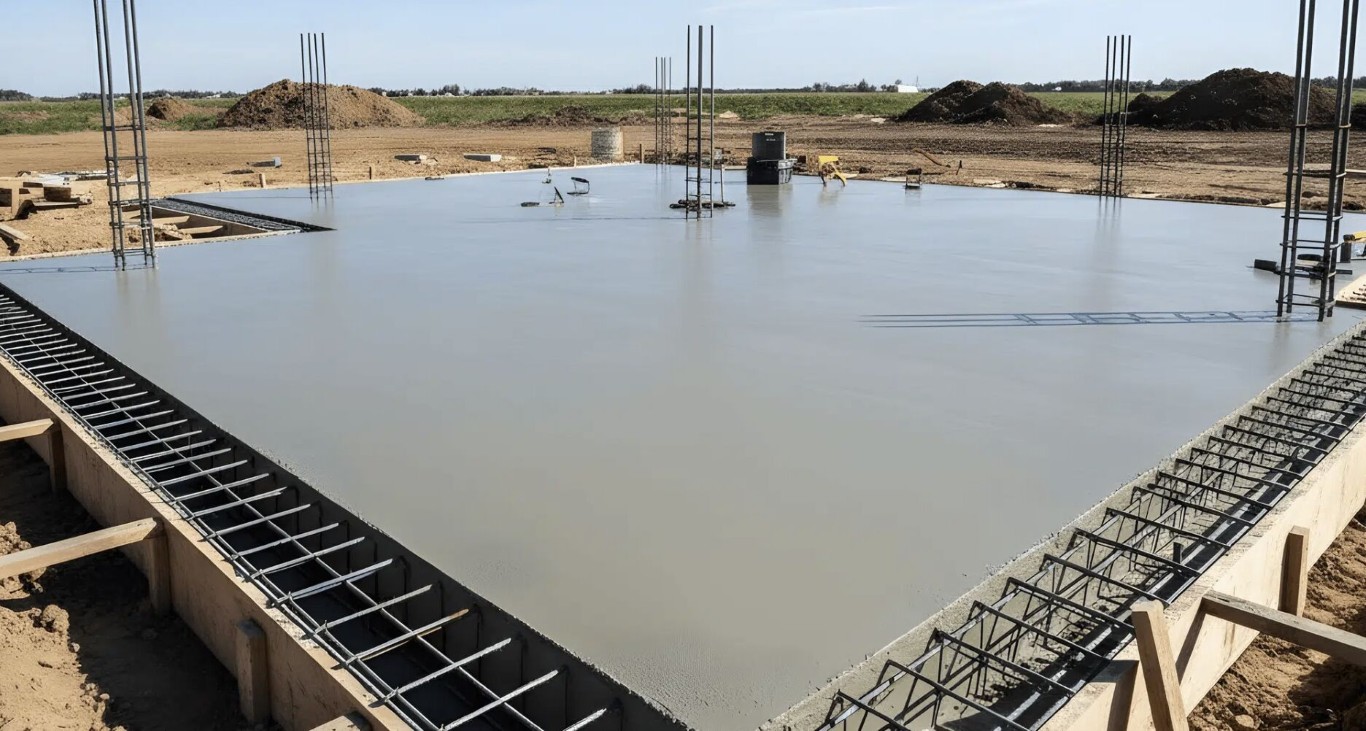
- Forms and reinforcement: We build forms to the exact dimensions and install steel rebar or post-tension cables for strength.
- Plumbing and utilities: If your slab includes plumbing or electrical lines, we coordinate with other trades to get everything in place before the pour.
- Concrete pour: We pour high-quality concrete and carefully level and finish the surface. For post-tension slabs, we return later to tension the cables.
- Curing: The concrete needs time to gain full strength. We protect it from weather and foot traffic during this period.
We follow all local building codes and work with inspectors to make sure everything passes. Our goal is to deliver a foundation you can build on with confidence. Need expert concrete work for your home or business? Contact us for a free consultation and estimate on your foundation project.
Frequently Asked Questions
How thick should a concrete slab be?▼
For most residential foundations, we pour slabs that are 4 to 6 inches thick. The exact thickness depends on what the slab will support. A simple shed floor might only need 4 inches. A home foundation typically requires 4 to 5 inches. Garage slabs that support vehicles should be 5 to 6 inches. Commercial buildings or areas with heavy equipment may need even thicker slabs. We calculate the right thickness based on your specific project requirements and soil conditions.
How long does a foundation pour take?▼
The actual concrete pour usually takes just one day, but the entire project takes longer. Site prep, excavation, and base work might take 2 to 5 days depending on the size. After the pour, the concrete needs at least 7 days to cure before construction can continue. Larger projects or those with complications like poor soil or plumbing installation will take more time. We give you a realistic timeline before we start so you know what to expect.
What causes foundation problems in North Texas?▼
Our clay soil is the main culprit. When clay gets wet, it expands. When it dries out, it shrinks. This constant movement puts stress on foundations. Poor drainage makes the problem worse by letting water collect around the foundation. Trees too close to the building can also cause issues as their roots pull moisture from the soil. That is why proper site preparation, good drainage, and the right type of foundation are so important. If you already have foundation issues, check out our concrete repair services to address problems before they get worse.