Retaining Walls & Concrete Masonry
Control erosion, create level spaces, and add structure to your property with professionally built retaining walls.
Solve Slope and Drainage Problems
If your property has slopes or uneven terrain, a retaining wall can transform unusable space into functional areas. Retaining walls hold back soil on sloped yards, prevent erosion, and create level spaces for patios, gardens, or play areas. They also protect your foundation by directing water away from your home.
In Farmers Branch and throughout North Texas, soil movement is a constant challenge. Our clay soil expands and contracts with moisture changes, putting pressure on walls and foundations. A properly engineered retaining wall accounts for these forces. It includes drainage features that prevent water from building up behind the wall and pushing it over. Poor drainage is the number one reason retaining walls fail.
We design and build retaining walls that last. Our walls include proper footings, adequate reinforcement, and effective drainage systems. Whether you need a short decorative wall around a garden bed or a tall structural wall to terrace a steep slope, we have the expertise to build it right. We also handle all necessary engineering and permits for walls over 4 feet tall.
Types of Retaining Walls and Masonry Work
Different situations call for different types of walls. Here are the options we offer and when each works best.
Poured Concrete Retaining Walls
Concrete retaining walls built by pouring into forms are incredibly strong and work well for tall walls or areas with significant soil pressure. We pour a concrete footing below the frost line, build the wall to the specified height, and backfill with gravel for drainage. The concrete can be left natural, painted, or finished with a decorative texture. Poured concrete walls last 50 years or more with minimal maintenance.
Concrete Block Retaining Walls
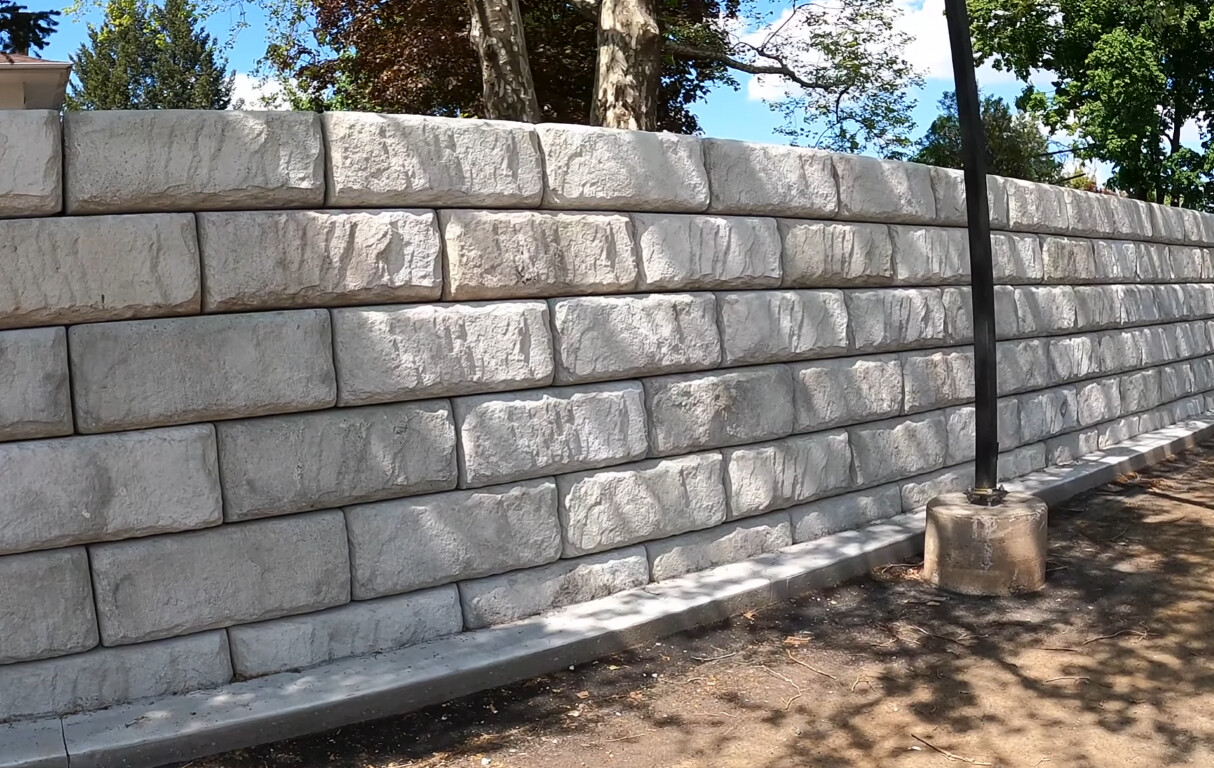
Concrete blocks are a cost-effective option for shorter walls. We stack interlocking blocks that are designed specifically for retaining walls. These blocks have lips or pins that hold them together and create a stable structure. Hollow cores can be filled with concrete and rebar for added strength. The modular nature of blocks makes them adaptable to curves and varied terrain.
Decorative Stone and Brick Masonry
For shorter decorative walls, we build with natural stone or brick. These materials add character and charm to your landscaping. Stone walls can be dry-stacked for a rustic look or mortared for a more formal appearance. Brick walls complement traditional home styles and can match your house for a cohesive look. These walls work best for heights under 3 feet and provide visual interest more than structural support.
Concrete Planters and Raised Beds
Short concrete walls make excellent planters and raised garden beds. We build these to whatever dimensions you need for your gardening plans. Built-in seating walls around patios or fire pits are another popular option. These functional features add structure to your outdoor space while serving a practical purpose. Looking to add a patio to go with your retaining wall? Our patio installation services can complete your outdoor transformation.
Engineering and Building for Long-Term Stability
A retaining wall is more than just stacking blocks or pouring concrete. It must resist significant forces from the soil it holds back. Poor design or construction leads to cracking, leaning, or complete failure. Here is what we do to ensure your wall stands strong for decades.
- Site assessment: We evaluate the soil, slope angle, and drainage conditions. This tells us what type of wall you need and how it should be built.
- Proper footing: Every retaining wall needs a solid footing below the frost line. This prevents settling and frost heave. The footing size depends on wall height and soil conditions.
- Drainage system: We install gravel backfill and weep holes or drainage pipes to let water escape. This prevents hydrostatic pressure from building up behind the wall.
- Reinforcement: Steel rebar adds tensile strength to concrete walls. For tall walls, we may use geogrids or tiebacks that anchor into the soil behind the wall.
- Batter or setback: Most retaining walls lean slightly back into the slope. This counteracts the forward pressure from the retained soil.
- Compaction: We compact the soil in layers as we backfill. This prevents settling that could put stress on the wall.
- Engineering when required: Local codes require engineering for walls over 4 feet tall. We work with structural engineers to design walls that meet all requirements.
We build walls that follow engineering principles and building codes. This is not the place to cut corners or guess at dimensions. A failed retaining wall is expensive to replace and can damage your property. We do it right the first time so you never have to worry about it. Thinking about other outdoor concrete projects? Our walkway and flatwork services can connect your new retaining wall to the rest of your landscape. Contact us for a free site evaluation and retaining wall estimate.
Frequently Asked Questions
How tall can a retaining wall be without engineering?▼
In most areas including Farmers Branch, retaining walls over 4 feet tall require engineered plans and permits. Walls under 4 feet can typically be built without formal engineering, though they still need proper construction techniques. The 4-foot rule assumes normal soil conditions and no steep slopes. If your property has challenging conditions like clay soil, poor drainage, or steep grades, even shorter walls might need engineering. We evaluate your specific site and let you know what is required to build safely and legally.
What is the most affordable type of retaining wall?▼
Concrete block retaining walls are usually the most budget-friendly option. The blocks are mass-produced and quick to install compared to poured concrete or natural stone. For very short walls under 2 feet, timber can be even cheaper, but it only lasts 10 to 15 years before rotting. Block walls last 30 to 50 years with minimal maintenance. While the upfront cost of poured concrete is higher, it may be more economical for tall walls that need maximum strength. We provide quotes for different wall types so you can compare and choose the best value for your situation.
Can you repair an existing retaining wall that is failing?▼
It depends on the extent of the damage. Minor cracks or surface damage can often be repaired. However, if the wall is leaning, bulging, or showing signs of structural failure, repairs are usually not effective. The underlying problem is typically poor drainage or inadequate footings, which cannot be fixed without rebuilding. We inspect failing walls and give you an honest assessment of whether repair or replacement makes more sense. In many cases, rebuilding the wall correctly costs less in the long run than repeatedly patching a wall that continues to fail.