Garage Floors (Epoxy & Coatings)
Transform your garage floor from dull and stained to showroom quality with professional epoxy and coating systems.
Why Your Garage Floor Deserves Better
Your garage is more than just a place to park cars. It is your workshop, your storage space, and sometimes your home gym or hobby area. A bare concrete floor absorbs oil, collects dust, and shows every stain. Over time, it becomes an eyesore that makes your entire garage look dirty no matter how much you clean it.
Epoxy and protective coatings solve these problems. They seal the concrete, preventing stains and making the floor easy to clean. They add durability to resist wear from vehicles, tools, and heavy equipment. Best of all, they transform your garage into a space you can be proud of. A professionally coated garage floor looks clean, modern, and finished.
We install garage floor coatings throughout Farmers Branch for homeowners who want their garages to look as good as the rest of their homes. Whether you use your garage for parking, projects, or storage, a quality floor coating makes it more functional and attractive. If you are researching options, reviewing how other experienced teams handle garage floor concrete can help you ask the right questions before getting quotes. The investment pays off in easier maintenance and increased home value.
Types of Garage Floor Coatings
Different coating systems offer different benefits. Here are the main options we install and when each makes sense.
Epoxy Coatings
Epoxy is the most popular garage floor coating. It consists of resin and hardener that chemically bond to create an extremely durable surface. Epoxy resists oil, chemicals, and impacts. It comes in various colors and you can add decorative flakes for a custom look. The glossy finish reflects light and brightens your garage. Properly applied epoxy lasts 10 to 20 years with minimal maintenance.
Polyurea and Polyaspartic Coatings
These newer coatings cure faster than epoxy, often in just a few hours. You can use your garage the next day instead of waiting several days. They are more flexible than epoxy, so they resist cracking better. They also hold up to UV light without yellowing. The downside is they cost more than standard epoxy. We recommend these for customers who need their garage back in service quickly.
Concrete Stains and Sealers
If you prefer a more natural look, concrete stains add color while letting the texture show through. We follow up with a clear sealer to protect the surface. This option costs less than epoxy and gives you a matte finish instead of glossy. It works well if you want a subtle, refined look rather than a high-gloss showroom appearance.
Epoxy with Decorative Flakes
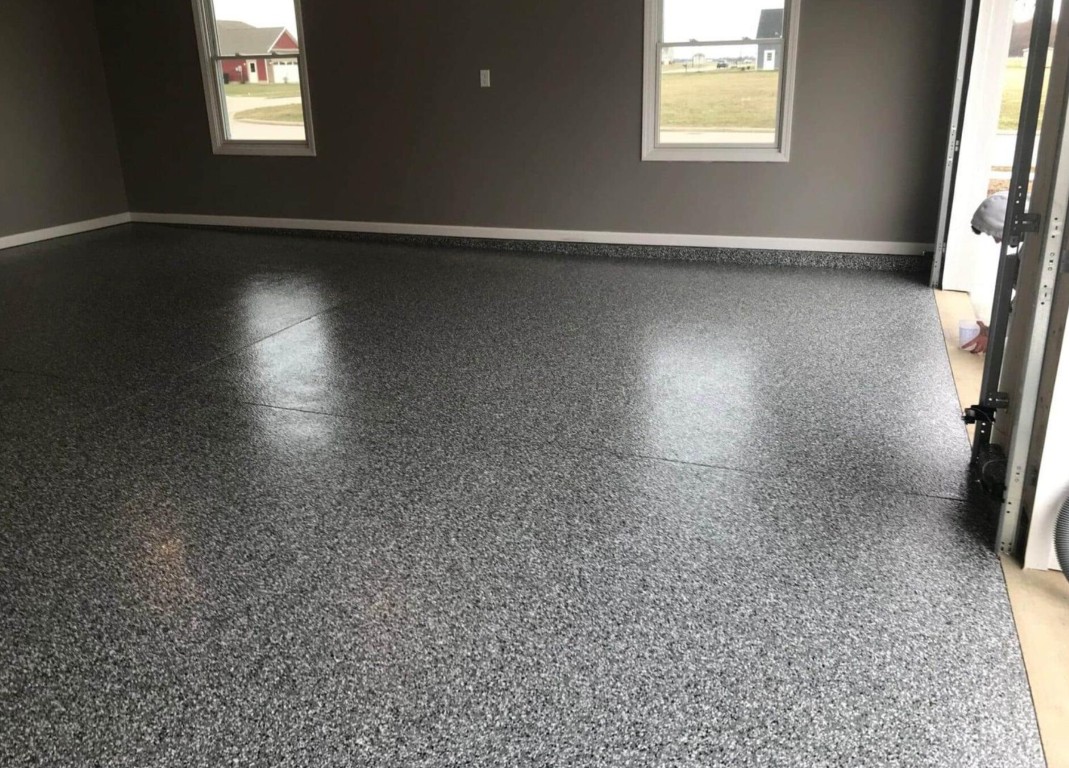
Adding colored flakes to epoxy creates visual interest and helps hide dirt and imperfections. You can choose flake colors that complement your home or create contrast. The flakes also add texture for better traction. This is our most requested finish because it combines durability with great looks. For complete garage floor installation including the slab, check our concrete slab services.
Our Professional Installation Process
The key to a long-lasting coating is proper surface preparation. Most DIY coating failures happen because the concrete was not prepared correctly. We take the time to do it right.
- Surface inspection: We check for cracks, spalling, and moisture issues. Any problems get addressed before coating.
- Crack and damage repair: We fill cracks and patch damaged areas so the coating goes on smoothly.
- Grinding and etching: We mechanically grind the concrete or use acid etching to create a rough surface. This allows the coating to bond properly.
- Deep cleaning: All dirt, oil, and contaminants get removed. The concrete must be perfectly clean for proper adhesion.
- Primer application: We apply a primer coat that penetrates the concrete and provides a base for the topcoat.
- Base coat: The main coating goes on in one or two coats depending on the product and desired thickness.
- Decorative flakes (optional): If you choose flakes, we broadcast them onto the wet coating for even coverage.
- Clear topcoat: A final clear coat adds extra protection and creates the glossy finish. This layer takes the most abuse from tires and foot traffic.
The entire process typically takes 2 to 3 days including prep and curing time. We protect your walls and door frames during application and clean up completely when done. Your garage will be ready to use within 24 to 72 hours depending on the coating system. Planning other concrete improvements? Our driveway services can coordinate with your garage floor for a unified look. Contact us to schedule your garage floor transformation.
Frequently Asked Questions
How much does garage floor epoxy cost?▼
Professional epoxy coating typically costs $3 to $7 per square foot depending on the system and options you choose. A standard two-car garage of 400 to 500 square feet runs $1,200 to $3,500. Basic epoxy is on the lower end, while high-performance polyaspartic systems with decorative flakes cost more. This price includes all prep work, materials, and labor. DIY kits cost less upfront but often fail within a few years due to improper preparation or application. Professional installation comes with warranties and lasts much longer.
How long does epoxy garage flooring last?▼
Professionally installed epoxy coatings last 10 to 20 years or more with proper care. The longevity depends on the quality of materials, surface preparation, and how much traffic the garage gets. Heavy use from multiple vehicles or workshop activities may require a refresh sooner. The topcoat takes most of the wear, and we can reapply just the top layer if needed without redoing the entire floor. Simple maintenance like sweeping and occasional mopping keeps your floor looking great for years.
Can epoxy be applied over old coatings or damaged concrete?▼
It depends on the condition. Old paint or failing coatings must be removed completely before applying new epoxy. We grind these off during preparation. Minor cracks and small damaged areas can be repaired and coated. However, if your floor has major structural cracks, widespread spalling, or moisture problems, these issues need to be fixed first. We inspect your floor and give you an honest assessment of what is needed. Sometimes repairs or even replacement make more sense than coating a badly damaged floor.